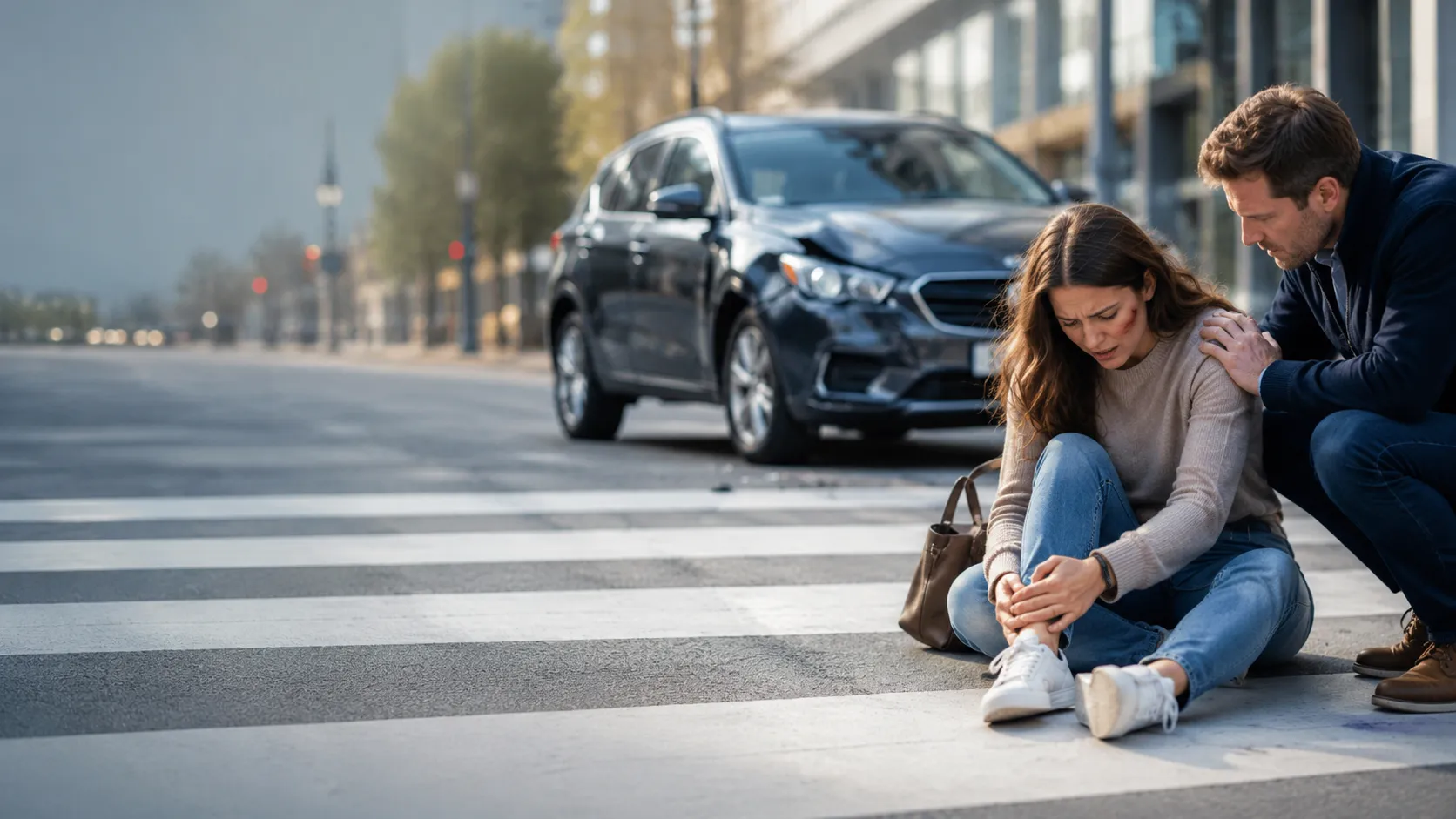
New York gives pedestrians real legal protection, and it also sets deadlines that quietly end cases. Here is what the law asks of drivers, what it asks of you, and what to do if you are hit.
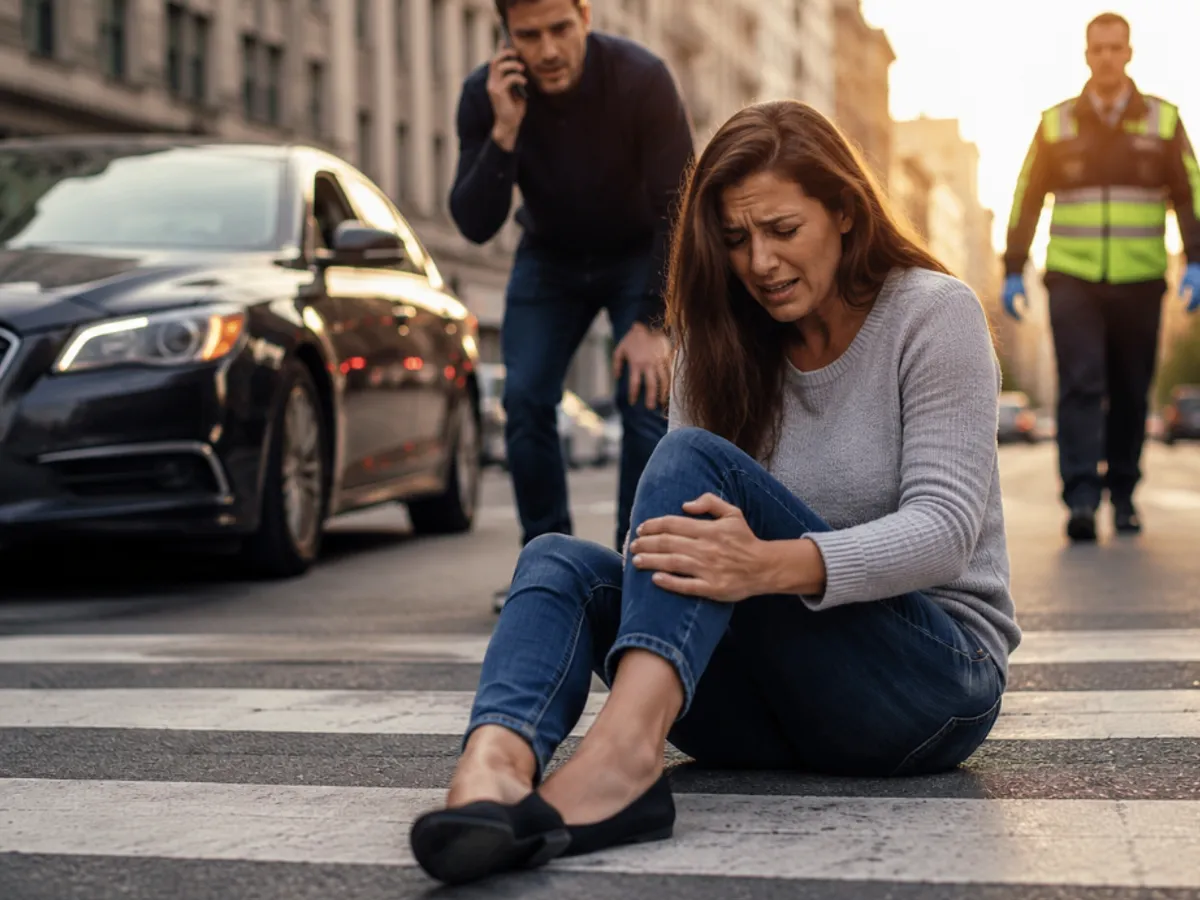
Most people who walk in this city think about pedestrian safety as a matter of caution: look twice, do not trust a turning truck, stay off the phone at the curb. That is sound advice, but it leaves out half the picture. New York law puts specific obligations on drivers around people on foot, and it gives injured pedestrians a defined set of rights. Knowing where those lines sit changes what you do in the minutes after a crash, and it often changes the outcome months later.
This article covers what the law actually says, what happens to your medical bills, why being partly at fault does not end your claim, and the deadlines that end more cases than bad facts ever do.
The core rule is Vehicle and Traffic Law section 1151. Where there is no traffic signal, or the signal is not operating, a driver must yield the right of way to a pedestrian crossing within a crosswalk. The same section adds a rule that matters more than most people realize: when a vehicle has stopped at a crosswalk to let someone cross, a driver approaching from behind may not overtake and pass it. That is the maneuver behind a large share of serious crosswalk injuries.
Within the five boroughs there is a second layer. New York City Administrative Code section 19-190, the Right of Way Law passed in 2014, makes it a misdemeanor for a driver to fail to yield to a pedestrian in a crosswalk when that failure causes physical injury. It is a local law, and it is separate from the state traffic infraction. A driver can face a Traffic Violations Bureau proceeding under the state statute and a criminal charge under the city code arising from the same collision.
A traffic charge is not the same thing as your civil case, and a driver being acquitted or having a ticket dismissed does not decide your claim. The two proceedings ask different questions and apply different standards of proof. But how a driver was charged, and what the officer wrote at the scene, is often the first real evidence about how the collision happened.
Section 1151 runs in both directions. A pedestrian may not suddenly leave a curb or other place of safety and walk or run into the path of a vehicle that is so close the driver cannot reasonably yield. Insurance companies lean on that sentence constantly, and in a genuine dart-out case it carries weight.
It carries less weight than adjusters suggest, though, because the rule is about proximity, not about who technically had the signal. A driver still has a duty to see what is there to be seen and to operate with reasonable care, including at intersections where a pedestrian entered against the light. Fault in these cases is usually shared rather than assigned entirely to one side.
A point that surprises people: an unmarked crosswalk is still a crosswalk. At most intersections, the area connecting the sidewalks across the roadway is a crosswalk in law whether or not anyone has painted lines on it. Being told at the scene that you were not in a crosswalk, when you were crossing at a corner, is frequently wrong.
Hit while crossing in Queens or anywhere in New York City? Talk it through with an attorney before you talk to an insurer.New York is a no-fault state, and pedestrians are inside that system. If a motor vehicle strikes you, the no-fault benefits available through that vehicle's insurance generally pay your initial medical treatment and a portion of lost earnings, regardless of who caused the crash. You do not have to prove the driver was at fault to open that claim, and you should not wait to open it.
No-fault has strict paperwork deadlines that are much shorter than the deadline for a lawsuit. Missing them can cut off the coverage that pays for your treatment while everything else is still being sorted out. This is the single most common way an otherwise strong pedestrian case gets harder than it needed to be.
No-fault covers economic losses. To recover non-economic damages, meaning pain and suffering, New York requires that you meet the serious injury threshold in Insurance Law section 5102(d). Insurance Law section 5104(a) is the provision that makes meeting that threshold a condition of bringing the claim.
The statute defines serious injury through a list of categories rather than a severity score. They include a bone fracture, significant disfigurement, permanent loss of use of a body organ or member, permanent consequential limitation, significant limitation of use of a body function or system, and a medically determined injury that prevents you from performing substantially all of your usual daily activities for at least 90 of the 180 days following the crash. Death is also within the definition.
Whether an injury meets one of those categories is a medical and legal question, and it turns heavily on documentation created early. Gaps in treatment are the most common reason a genuinely injured person is later argued not to meet the threshold.
New York applies pure comparative fault under CPLR 1411. If you are found partly responsible, your recovery is reduced by your percentage of fault. It is not a bar. A pedestrian found twenty percent responsible for crossing mid-block can still recover eighty percent of the damages proven.
This matters because people talk themselves out of calling an attorney over exactly this. If you were on your phone, or crossing against the light, or wearing dark clothing at night, none of that ends the claim. It affects the arithmetic.
Against a private driver, CPLR 214(5) gives you three years from the date of the collision to start a lawsuit. That is the number most people have heard, and for most pedestrian cases it is the right one.
It is not the right one when a public entity is involved, and in this city public entities are involved often. A city bus, a sanitation truck, a police vehicle, a dangerous roadway condition, a defective sidewalk maintained by a municipality: any of these puts you under General Municipal Law section 50-e, which requires a written notice of claim within 90 days of the incident. Under section 50-i, suit must then be brought within one year and 90 days. Late notice can sometimes be excused by a court, but that is a motion you have to win, not a right you have.
Ninety days goes quickly when you are having surgery. If there is any chance a government vehicle or a government-maintained property is part of what happened, that clock should be treated as the operative one from day one.
The useful evidence in a pedestrian case has a short life. Video gets overwritten, vehicles get repaired, and memories settle into whatever story was told first. We move on preservation early, obtain the police and any city records, and identify the cameras that had a view of the intersection.
We get the no-fault application filed inside its deadline so your treatment is covered while liability is still being argued, and we deal with the insurer's paperwork rather than leaving it on you while you are recovering.
Sometimes the driver is not the only one. A commercial vehicle brings an employer into the case. A poorly designed or unmaintained crossing can bring in a municipality, with the shorter notice deadline that follows. We work out who is properly in the case before the clock on any of them runs.
Meeting the section 5102(d) threshold is a documentation exercise as much as a medical one. We make sure your treatment is recorded in the terms the statute uses, and we work with your physicians rather than around them.
Most pedestrian claims resolve without trial. They resolve on better terms when the file is built as though it will be tried, and when the insurer knows the firm across the table is prepared to do it.
If you or a family member was hurt crossing a street anywhere in New York City, call (718) 878-1177 or contact us online for free.
This article is general information about New York law, not legal advice, and reading it does not create an attorney-client relationship. Every case turns on its own facts. For advice about your situation, call (718) 878-1177 or contact us.
Possibly. New York uses pure comparative fault under CPLR 1411, so crossing against a signal reduces your recovery by your share of the fault rather than eliminating it. Drivers still have a duty to see what is there to be seen and to operate with reasonable care. Do not decide on your own that you have no claim.
Usually yes. At most intersections the area connecting the sidewalks across the roadway is a crosswalk in law whether or not it is marked. Being told at the scene that you were not in a crosswalk, when you were crossing at a corner, is frequently wrong.
New York's no-fault system generally does, through the insurance on the vehicle that struck you, and it pays regardless of who was at fault. No-fault has short filing deadlines, so the application should go in quickly rather than waiting to see how the rest of the case develops.
It is the standard in Insurance Law section 5102(d) that you must meet to recover pain and suffering. It is a list of categories rather than a severity score, including fracture, significant disfigurement, permanent consequential limitation, significant limitation of use, and being unable to perform substantially all of your usual activities for 90 of the 180 days after the crash.
Against a private driver, three years from the date of the collision under CPLR 214(5). If a city vehicle, a public agency, or a government-maintained roadway is involved, a written notice of claim is generally due within 90 days under General Municipal Law section 50-e, and suit must be started within one year and 90 days. Those deadlines are much shorter, so get advice early.
No. A traffic proceeding and a civil claim ask different questions under different standards. A ticket, or the lack of one, is evidence about how the crash happened rather than a ruling on your claim.
You may still have a path to recovery through uninsured motorist coverage, and identifying the vehicle later is more common than people expect once camera footage is pursued promptly. Report the incident to the police and speak with an attorney quickly, because the useful footage has a short life.
Nothing upfront. Personal injury matters are handled on a contingency fee, which means the fee comes out of a recovery and there is no fee if there is no recovery. The initial consultation is free.
A free consultation is the fastest way to find out where you stand and what your options actually are.